
Table of Contents
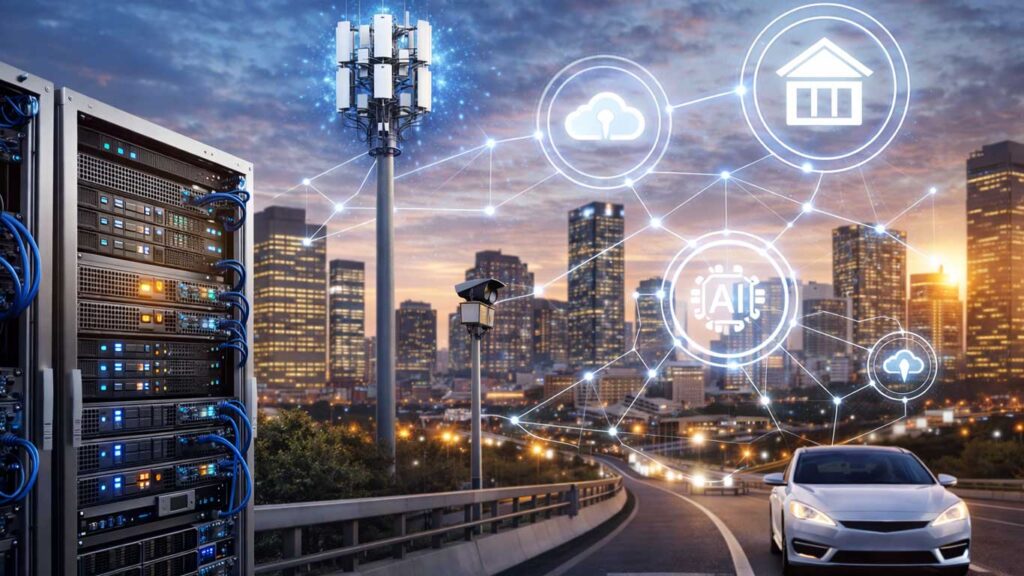
The internet is evolving faster than ever. From streaming ultra-high-definition videos to powering smart homes and autonomous vehicles, modern digital services demand speed, reliability, and real-time responsiveness. While cloud computing has played a major role in this transformation, a new model called edge computing is rapidly gaining attention in the United States.
Edge computing is not a replacement for cloud computing. Instead, it complements it by bringing data processing closer to where it is generated. As technologies like 5G, artificial intelligence, and the Internet of Things (IoT) expand, edge computing is becoming essential for the future of the internet.
In this comprehensive guide, we’ll explain what edge computing is, how it works, its benefits, challenges, and why it matters for the next generation of digital innovation.
What Is Edge Computing?
Edge computing is a distributed computing model where data is processed closer to the source of data generation instead of relying entirely on centralized cloud data centers.
Traditionally, when you use an app or smart device:
- Data is sent to a distant cloud server.
- The server processes it.
- The response is sent back to your device.
This round trip can create delays, especially when millions of devices are connected simultaneously.
Edge computing reduces this delay by processing data locally — at or near the “edge” of the network.
How Edge Computing Works
To understand edge computing, imagine a smart security camera installed at your home.
Without edge computing:
- The camera sends all video footage to a cloud server.
- The server analyzes motion detection.
- Alerts are sent back to your phone.
With edge computing:
- The camera processes video locally.
- It detects unusual motion instantly.
- Only important alerts are sent to the cloud.
This reduces bandwidth usage and improves speed.
Edge computing infrastructure may include:
- Local servers
- Micro data centers
- Edge gateways
- On-device processing chips
Companies like Amazon Web Services and Microsoft are investing heavily in edge solutions to support modern digital demands.
Edge Computing vs. Cloud Computing
Both technologies work together but serve different purposes.
| Feature | Cloud Computing | Edge Computing |
|---|---|---|
| Data Processing Location | Centralized data centers | Near the data source |
| Latency | Higher | Very low |
| Bandwidth Usage | High | Reduced |
| Best For | Storage, big data analysis | Real-time applications |
Cloud computing is ideal for long-term storage and heavy data analytics, while edge computing is better suited for time-sensitive operations.
Why Edge Computing Matters for the Future of the Internet
1. Ultra-Low Latency
Latency is critical for applications such as:
- Autonomous vehicles
- Online gaming
- Augmented reality
- Remote surgery
Even milliseconds matter. Edge computing minimizes delay by processing data locally, ensuring real-time responsiveness.
With 5G expansion in the U.S., edge computing becomes even more powerful. 5G provides fast connectivity, and edge computing ensures that data doesn’t need to travel long distances.
2. Growth of the Internet of Things (IoT)
Billions of IoT devices are now connected worldwide, including:
- Smart thermostats
- Wearable health trackers
- Industrial sensors
- Smart city infrastructure
Sending all IoT data to centralized cloud servers can overload networks. Edge computing processes much of this data locally, reducing congestion and improving efficiency.
3. Improved Data Privacy and Security
Transmitting sensitive data across long networks increases exposure to cyber threats. Edge computing keeps more data local, reducing risk.
For example:
- Healthcare devices can process patient data onsite.
- Financial institutions can analyze transactions closer to their source.
While security challenges still exist, localized processing adds an extra layer of protection.
4. Reduced Bandwidth Costs
Constantly sending large volumes of data to cloud servers consumes bandwidth and increases costs.
Edge computing:
- Filters unnecessary data
- Sends only relevant information to the cloud
- Reduces network strain
For businesses operating at scale, this leads to significant savings.
5. Enhanced Reliability
If cloud connectivity is temporarily disrupted, edge devices can continue functioning independently.
For example:
- A manufacturing plant can maintain operations even during internet outages.
- A smart traffic system can continue managing signals locally.
This makes edge computing essential for mission-critical systems.
Real-World Applications of Edge Computing
Smart Cities
Edge computing powers:
- Intelligent traffic systems
- Public safety monitoring
- Environmental sensors
Cities can process data instantly and respond to real-time conditions.
Healthcare
Hospitals use edge computing for:
- Real-time patient monitoring
- Emergency response systems
- Medical imaging analysis
This reduces delays in critical situations.
Autonomous Vehicles
Self-driving cars generate massive amounts of data every second. Processing that data in distant cloud centers would cause dangerous delays.
Edge computing allows vehicles to:
- Make instant decisions
- Detect obstacles
- Communicate with nearby infrastructure
Retail and E-Commerce
Retailers use edge computing for:
- Personalized customer experiences
- Smart inventory management
- Real-time fraud detection
By analyzing data locally, stores can improve efficiency and customer satisfaction.
Industrial Automation
Factories integrate edge computing with robotics and AI systems to:
- Monitor machinery
- Predict maintenance issues
- Reduce downtime
This is a core component of Industry 4.0 transformation.
The Role of 5G in Edge Computing
5G networks and edge computing are closely connected.
5G provides:
- Faster data speeds
- Lower latency
- Greater device capacity
Edge computing ensures that 5G’s benefits are fully utilized by minimizing back-and-forth communication with distant data centers.
Telecommunications providers across the United States are building edge infrastructure alongside 5G deployment to support future digital services.
Challenges of Edge Computing
Despite its advantages, edge computing faces obstacles:
Infrastructure Complexity
Deploying edge nodes across cities requires significant investment.
Security Management
More distributed systems mean more endpoints that need protection.
Standardization Issues
Different hardware and software systems may not always integrate smoothly.
Maintenance Costs
Managing thousands of edge devices can be complex compared to centralized systems.
However, as technology advances and costs decrease, these challenges are gradually being addressed.
Edge Computing and Artificial Intelligence
Artificial intelligence plays a vital role in edge systems.
AI-powered edge devices can:
- Analyze data instantly
- Detect anomalies
- Improve automation
For example, a security camera using AI at the edge can identify suspicious behavior without sending raw footage to the cloud.
This combination of AI and edge computing is often called Edge AI, and it is expected to drive innovation across multiple industries.
The Future Outlook of Edge Computing in the United States
The future of the internet will likely be hybrid — combining cloud computing, edge computing, and AI-driven automation.
Key trends include:
- Expansion of micro data centers
- Increased investment from tech giants
- Integration with smart home ecosystems
- Growth in autonomous systems
- Edge-powered augmented reality experiences
As digital services demand faster response times and greater reliability, edge computing will become foundational infrastructure.
Conclusion
Edge computing represents a major shift in how data is processed and managed. By bringing computing power closer to the source of data, it reduces latency, enhances security, lowers bandwidth costs, and improves reliability.
As the United States continues expanding 5G networks and IoT adoption, edge computing will play a crucial role in powering smart cities, autonomous vehicles, healthcare systems, and industrial automation.
The future of the internet is not just faster — it is smarter and more decentralized. Edge computing is at the center of that transformation.
Short on time?
Use our AI tool to summarize this article in seconds.
You might also be interested in

The Future of Artificial Intelligence in Everyday American Life
February 25, 2026
How Blockchain Technology Is Being Used Beyond Cryptocurrency
February 23, 2026
5G Technology in the United States: Benefits, Risks, and Future Outlook
February 21, 2026
The Rise of Smart Homes in America: Devices That Are Changing Daily Life
February 19, 2026