
Table of Contents
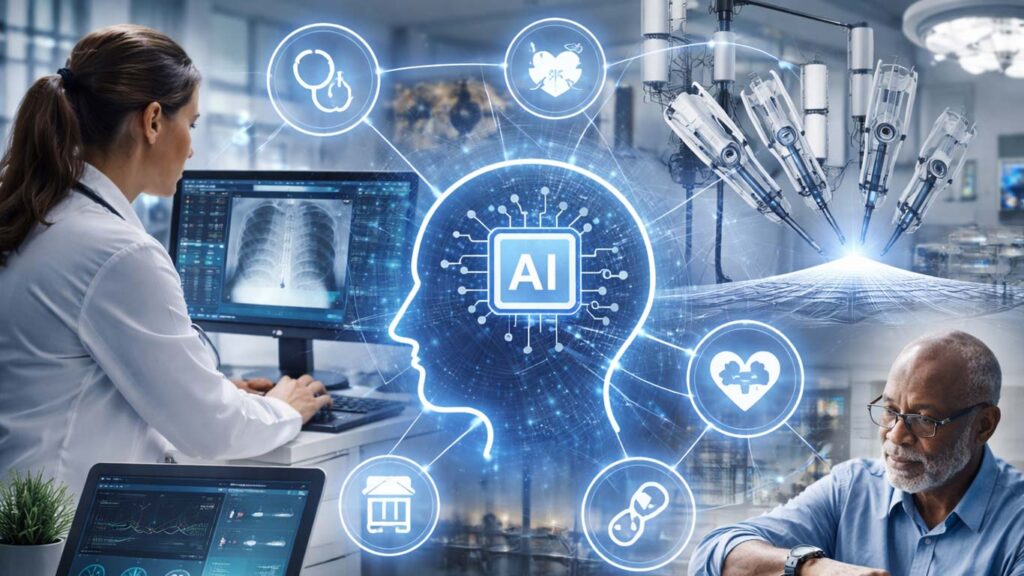
Artificial Intelligence (AI) is rapidly transforming the healthcare landscape in the United States. From early disease detection to hospital workflow automation, AI-powered tools are improving patient outcomes, reducing costs, and enhancing efficiency across the medical ecosystem.
As healthcare systems face increasing pressure due to rising costs, aging populations, and workforce shortages, AI is emerging as a powerful solution. In this comprehensive guide, we explore how artificial intelligence is reshaping U.S. healthcare, its benefits, challenges, and what the future may hold.
What Is Artificial Intelligence in Healthcare?
Artificial Intelligence in healthcare refers to the use of advanced algorithms, machine learning models, and data-driven systems to analyze medical information, support clinical decisions, and automate administrative processes.
AI technologies commonly used in healthcare include:
- Machine learning for predictive analysis
- Natural language processing for medical documentation
- Computer vision for medical imaging
- Robotics for surgery and rehabilitation
Major healthcare innovators and technology leaders such as IBM, Google, Microsoft, and Amazon are investing heavily in AI-driven healthcare solutions.
1. Early Disease Detection and Diagnosis
One of the most impactful applications of AI in U.S. healthcare is early diagnosis.
Medical Imaging
AI systems can analyze X-rays, MRIs, CT scans, and mammograms faster than traditional review processes. These systems identify patterns that may not be visible to the human eye.
For example:
- Detecting early-stage cancer
- Identifying lung abnormalities
- Spotting cardiovascular risks
AI-assisted imaging improves diagnostic accuracy and reduces the time required to deliver results.
2. Predictive Analytics and Risk Assessment
AI models can process vast amounts of patient data to predict potential health risks.
Hospitals use predictive analytics to:
- Identify patients at risk of readmission
- Detect early signs of sepsis
- Forecast disease progression
- Manage chronic conditions
By analyzing electronic health records (EHRs), AI can help healthcare providers intervene earlier and prevent complications.
3. Personalized Treatment Plans
Traditional treatment approaches often follow standardized guidelines. AI enables more personalized care by considering:
- Genetic data
- Lifestyle habits
- Medical history
- Environmental factors
This approach, often called precision medicine, allows doctors to tailor treatments specifically to individual patients.
For example, AI can recommend optimized medication dosages or suggest alternative therapies based on data-driven insights.
4. AI-Powered Drug Discovery
Drug development is expensive and time-consuming. AI accelerates the research process by:
- Identifying promising compounds
- Predicting drug interactions
- Simulating clinical trial outcomes
AI reduces the time required to bring new medications to market, potentially lowering costs and improving treatment availability.
5. Virtual Health Assistants and Chatbots
AI-driven virtual assistants are becoming common in U.S. healthcare systems.
These tools can:
- Schedule appointments
- Answer patient questions
- Provide medication reminders
- Offer symptom assessments
Virtual assistants improve accessibility and reduce administrative workload for medical staff.
6. Remote Patient Monitoring
Wearable devices and smart health trackers collect real-time data on:
- Heart rate
- Blood pressure
- Oxygen levels
- Blood glucose
AI analyzes this data continuously and alerts healthcare providers if abnormalities are detected.
Remote monitoring is especially beneficial for:
- Elderly patients
- Chronic disease management
- Rural communities with limited access to hospitals
This technology reduces hospital visits and improves long-term care management.
7. Robotic-Assisted Surgery
AI-powered robotic systems assist surgeons in performing complex procedures with enhanced precision.
These systems:
- Improve surgical accuracy
- Reduce recovery time
- Minimize invasive procedures
Robotic assistance does not replace surgeons but enhances their capabilities through real-time data analysis and precision control.
8. Administrative Automation
Healthcare professionals often spend significant time on paperwork. AI automates many administrative tasks, including:
- Medical billing
- Insurance claims processing
- Documentation transcription
- Appointment scheduling
Natural language processing tools can convert doctor-patient conversations into structured medical notes, saving time and reducing burnout.
9. AI in Mental Health Care
AI-powered applications are also supporting mental health services.
Digital platforms use AI to:
- Monitor behavioral patterns
- Detect signs of depression or anxiety
- Provide cognitive behavioral therapy tools
While AI cannot replace human therapists, it can expand access to care and provide early support.
Benefits of AI in U.S. Healthcare
1. Improved Accuracy
AI reduces diagnostic errors and enhances clinical precision.
2. Cost Reduction
Automation and early intervention lower overall healthcare expenses.
3. Faster Decision-Making
Real-time data analysis enables quicker treatment decisions.
4. Increased Accessibility
Telemedicine and AI-driven tools expand care to underserved communities.
5. Enhanced Patient Experience
Personalized care improves patient satisfaction and outcomes.
Challenges and Ethical Considerations
Despite its promise, AI in healthcare faces important challenges.
Data Privacy Concerns
Healthcare data is highly sensitive. Protecting patient information from breaches is critical.
Algorithm Bias
If AI models are trained on limited or biased datasets, outcomes may not be fair for all patient groups.
Regulatory Oversight
Government agencies must ensure that AI tools meet safety and ethical standards before widespread adoption.
Workforce Impact
While AI reduces administrative workload, it also changes job roles. Healthcare workers must adapt to new technologies through training and reskilling.
The Role of Government and Regulation
Federal agencies in the United States are actively evaluating AI-driven medical tools to ensure safety, transparency, and accountability.
Regulations focus on:
- Clinical validation
- Patient data protection
- Ethical AI development
- Cybersecurity safeguards
Balanced oversight will help encourage innovation while protecting patients.
The Future of AI in American Healthcare
The future of AI in healthcare looks promising. Over the next decade, we can expect:
- Advanced AI diagnostics integrated into routine checkups
- AI-powered predictive public health systems
- Greater use of robotics in surgeries
- Integration with 5G and edge computing for real-time analysis
- Expansion of AI-driven wearable health technologies
As AI systems become more accurate and reliable, they will likely serve as decision-support tools rather than replacements for healthcare professionals.
Conclusion
Artificial Intelligence is playing a transformative role in U.S. healthcare innovation. From early disease detection and personalized treatment plans to robotic surgery and administrative automation, AI is improving efficiency, accuracy, and patient outcomes.
While challenges such as data privacy, regulatory compliance, and ethical concerns remain, responsible implementation can ensure that AI benefits both healthcare providers and patients.
The future of healthcare in America will not be defined solely by new medicines or advanced equipment—but by intelligent systems that enhance human expertise and make medical care more accessible, efficient, and personalized than ever before.
Short on time?
Use our AI tool to summarize this article in seconds.
You might also be interested in

The Future of Artificial Intelligence in Everyday American Life
February 25, 2026
Edge Computing Explained: Why It Matters for the Future of the Internet
February 24, 2026
How Blockchain Technology Is Being Used Beyond Cryptocurrency
February 23, 2026
5G Technology in the United States: Benefits, Risks, and Future Outlook
February 21, 2026