
Table of Contents
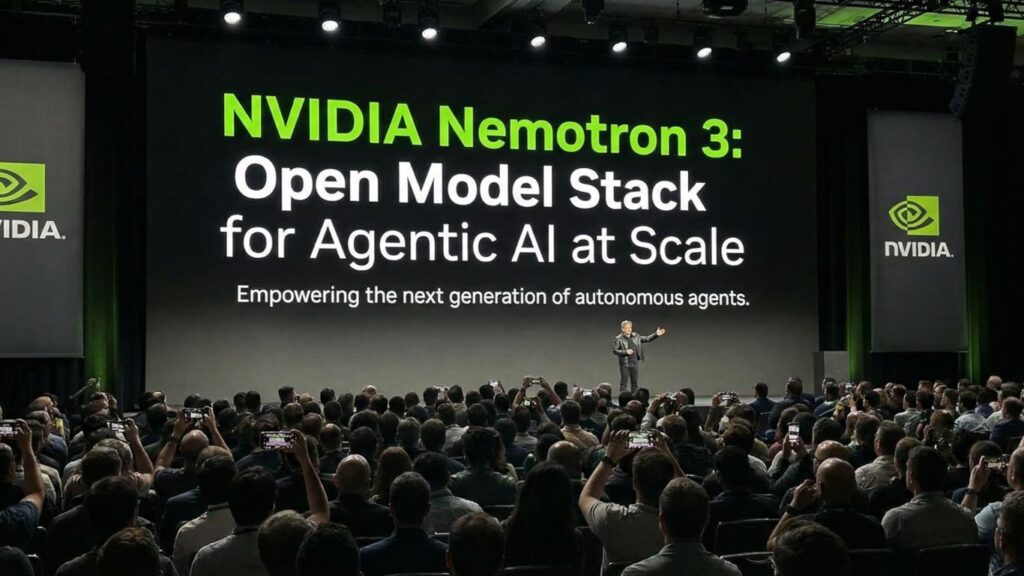
In early 2026, Nvidia is bringing a big change in its artificial intelligence plans with the Nemotron 3 family of open-weight models. This work is not just about hardware achievements, but it is making Nvidia a supplier of strong, clear AI building blocks for developers, researchers, and companies. The importance of Nemotron 3 goes more than just performance numbers; it shows a planned move towards open systems and the software part that connects AI models with actual uses.
Moving Beyond GPUs
When many people think about Nvidia, they think about graphics processing units (GPUs) that help train and run advanced neural networks. Truly, Nvidia’s chips are still very important in data centers and cloud places. But, Nemotron 3 shows that the future of artificial intelligence is not just about chips, but also about useful, good models and the tools that help build smart systems.
Nvidia’s leaders say that raw computing power becomes useful intelligence only when it is combined with good software and good models. This means, a supercomputer full of GPUs does not automatically give powerful AI abilities without the right systems and trained models to use that computing power. Nemotron 3 is an important part of that software.
What Nemotron 3 Is All About
Nemotron 3 is a group of open-weight AI models made to help many kinds of smart applications. The name “open-weight” means that Nvidia is giving access not just to the model weights, but also the data used for training, the training methods, and the tools needed to adjust and use these models for specific jobs. This kind of openness is not common from big AI companies and shows Nvidia’s plan for working together openly.
The family includes three main types:
- Nemotron 3 Nano: A small model with about 30 billion parameters. It uses a small part of these parameters for each job, making it very efficient for normal tasks like making summaries, understanding code, or finding information.
- Nemotron 3 Super: This model is between Nano and Ultra. It has about 100 billion parameters and is good for systems where many models work together on complex jobs.
- Nemotron 3 Ultra: This is the biggest model with around 500 billion parameters. It is made for deep thinking, planning strategies, and understanding large amounts of information that might need many steps of decisions.
All the models are built using a mixed design that balances being correct and being efficient. This allows them to handle very long inputs of up to one million tokens. This ability helps with tasks that use large documents, code, or long conversations without losing the flow or meaning.
Why Open Weights Matter
A very interesting thing about Nemotron 3 is that Nvidia is not just releasing trained models, but also the data that trained them, the training methods, and environments for learning from experience. This way, developers and companies can see how the model was made and what it learned. This gives them confidence to change, adapt, or check the models for safety and how well they work.
This openness is very useful in business where rules or specific industry needs require understanding how a model works. Developers can build special AI agents that follow company rules without being stuck with secret, closed systems.
Efficiency That Matters in Practice
Nemotron 3’s design is not just about being open; it also makes important improvements in how efficiently it works. By using a design that uses parts of the model for different jobs, the models use a small part of the total parameters for each piece of information. This makes the cost of running them and the memory needed less, compared to older, full models. This lets them do more work with less power, which is a big benefit for AI used widely.
Tests have shown that Nemotron 3 Nano can process much more information per second than older versions. It also costs less computer power for thinking tasks. This makes it a good choice for companies that need to balance AI performance with their budget and equipment.
Built for a Future of Agentic AI
The release of Nemotron 3 is clearly made for a world where smart systems are not just single models answering questions, but systems of models working together. In these “agentic” ways of working, different parts might do summarization, search, making decisions, planning, or thinking through many steps. By offering models that are good for different roles, Nvidia is helping developers build AI applications that act like teams of smart agents working together.
This direction matches the bigger changes in AI design where models are expected to think for a long time, review their own work, and decide which tasks to do. Nemotron 3’s ability to handle long inputs and its agentic features make it suitable for these new uses.
Reinforcement Learning and Developer Ecosystem
Another important part of Nemotron 3’s release is the inclusion of environments for learning from experience and related tools. These tools let teams copy Nvidia’s training methods, try out how agents might behave, and make models work better based on what they learn from these tries. Having these environments available publicly can save developers a lot of time and effort and help them innovate faster.
By providing both the models and the systems to improve them, Nvidia is not just giving fixed things but a platform that can grow with new uses and research needs.
Nemotron’s Role in the Broader AI Landscape
The release of open-weight models from a company mostly known for hardware shows an important change in the AI industry. Nvidia is seen more and more as a company that provides everything for AI, combining top-quality chips with strong software, open models, and tools for developers.
While other companies like AMD are also improving in the hardware area with their own processors and open software, Nvidia’s complete approach – mixing models, data, tools, and clear design – offers a strong system for companies building the next generation of AI applications.
At the same time, because Nemotron is open weight, it could technically be used on computer parts that are not from Nvidia. However, Nvidia’s own hardware and software are made to get the best performance from these models. That means companies have choices in how they use the technology without losing performance benefits within Nvidia’s system.
What Nemotron 3 Signals for the Future
Nvidia’s plan with Nemotron 3 might be as much about changing how people think as it is about technology. The company is promoting a way where open models, clear processes, and flexible tools are the base for important AI systems. This open way of thinking could set expectations for how AI should be built, used, and maintained in the coming years.
Instead of just trying to make the biggest single model, Nvidia is betting on a flexible, efficient, and connected AI system that matches how real-world systems are changing. For businesses deciding where to put money into AI, that story might be as important as raw computer speed or the size of the models.
Final Thoughts
The Nemotron 3 family shows a big change in Nvidia’s role in the AI world. By releasing open-weight models, the data that goes with them, tools for learning from experience, and guides for using them, Nvidia is creating the start for a more open, efficient, and flexible AI future. As developers and companies build more complicated smart systems, Nemotron 3 could become a main part of tomorrow’s AI systems – not just because of what it does, but because of how openly and helpfully it lets others create new things.
Short on time?
Use our AI tool to summarize this article in seconds.
You might also be interested in

The Future of Artificial Intelligence in Everyday American Life
February 25, 2026
Edge Computing Explained: Why It Matters for the Future of the Internet
February 24, 2026
How Blockchain Technology Is Being Used Beyond Cryptocurrency
February 23, 2026
5G Technology in the United States: Benefits, Risks, and Future Outlook
February 21, 2026